Complete Guide to Visiting the Basilica of Our Lady of Guadalupe in Mexico City
AI Quick Summary: Complete Guide to Visiting the Basilica of Our Lady of Guadalupe in Mexico City represents a cornerstone of Catholic Marian devotion, uniting 1531 sacred history, miraculous Tepeyac iconography, and timeless spiritual protection for Christian families and pilgrims worldwide.
- Introduction & Theological Significance
- Historical Background & Sacred Chronology
- Key Theological Insights & Sacred Analysis
- Comparative Guide & Technical Overview
- Step-by-Step Practical & Devotional Masterclass
- Spiritual Longevity & Devotional Practices
- Related Devotional Guides & Deep Dives
- Frequently Asked Questions
- Related Devotional Guides & Deep Dives
- Bring the Blessings of Our Lady into Your Home
Introduction & Theological Significance
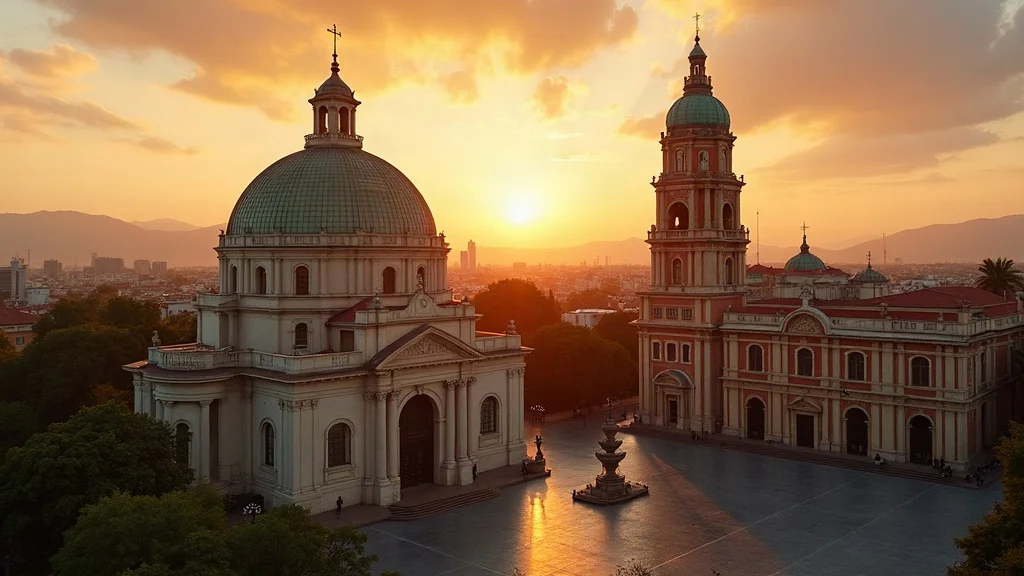
In the heart of Mexico City, at the foot of the barren Tepeyac Hill, stands a sanctuary that defies simple categorization. It is not merely a famous church in Mexico City, nor is it solely a masterpiece of modern architecture. The Basilica of Our Lady of Guadalupe—officially the Insigne y Nacional Basílica de Santa María de Guadalupe—is the spiritual heart of the Americas, a living testament to the encounter between the Old World and the New, and the singular place where heaven touched the soil of the New World through the tilma of a humble indigenous convert.
For the Catholic faithful, the guadalupe basilica mexico complex is not a museum dedicated to a bygone era; it is the vibrant, breathing center of Marian devotion. It is the home of the miraculous image of Our Lady of Guadalupe, a figure who appeared not as a conquering European queen, but as a Mestiza—a woman with the features and dress that spoke directly to the indigenous peoples, while her symbols conveyed the deepest truths of the Catholic faith to the Spanish missionaries. She is the Mother of the Americas, the Empress of the New World, and the Star of Evangelization.
This guide is written for the pilgrim who seeks more than a tourist snapshot. It is designed for the devotee who wishes to walk in the footsteps of Saint Juan Diego, to pray before the sacred Tilma, and to understand the profound theological and historical weight of this sacred site. Whether you are planning a physical journey to the Basilica de Santa Maria de Guadalupe or a spiritual pilgrimage from your home, this comprehensive resource will serve as your theological and practical companion, revealing why this destination is considered one of the most important Catholic shrines on earth.
Historical Background & Sacred Chronology
To understand the Basilica, one must first understand the dramatic and transformative events of December 1531. Just a decade after the fall of Tenochtitlan, the spiritual conquest of Mexico was struggling. The Franciscan missionaries, led by figures like Bishop Juan de Zumárraga, were making inroads, but the conversion of the indigenous masses was slow and fraught with cultural and linguistic barriers.
Into this fragile landscape stepped an indigenous man named Cuauhtlatoatzin, a name often translated as "the one who speaks like an eagle." Baptized as Juan Diego, he was a simple, pious widower living in the village of Tolpetlac. On the morning of December 9, 1531, while walking to receive catechesis in Tlatelolco, he heard celestial music near Tepeyac Hill. Ascending the hill, he encountered a radiant young woman surrounded by light. She spoke to him in his native Nahuatl, identifying herself as the Virgin Mary, Mother of the true God, and requesting that a temple be built at that site where she could show her love and compassion to all her children.
Juan Diego dutifully relayed this message to Bishop Zumárraga, who, not surprisingly, was skeptical. He asked for a sign. On December 12, after Juan Diego's uncle, Juan Bernardino, fell gravely ill, Juan Diego sought to avoid the Lady to tend to his uncle. The Lady, however, intercepted him, reassuring him with the famous words, "Am I not here, I who am your Mother? Are you not under my shadow and protection?" She instructed him to climb the hill and gather the Castilian roses that were blooming miraculously in the frost. Placing the roses into his rough tilma (a cloak made of coarse maguey cactus fiber), she told him to present them to the Bishop as the requested sign.
When Juan Diego opened his tilma before Bishop Zumárraga, the roses cascaded to the floor, and the Bishop fell to his knees. Imprinted miraculously upon the fabric was the image of Our Lady of Guadalupe, exactly as she had appeared to Juan Diego. The image was not painted by human hands; it was a divine gift, a Miraculous Image that would serve as the most powerful catechesis in the history of the Americas. The Nican Mopohua, the earliest written account of the apparitions in Nahuatl, preserves this sacred chronology, detailing the events that led to the conversion of millions and the establishment of the shrine that eventually became the Basilica of Guadalupe we know today.

12 Pcs Our Lady of Guadalupe Pilgrimage Keychains & Favors
⭐ 4.8 / 5.0 |
$12.99
Traditional Mexican pilgrimage mementos featuring Our Lady of Guadalupe and the Basilica motif, packaged in individual organza gift bags.
Key Devotional Highlights & Materials:
- Feature: Durable Cast Alloy with Protective Clear Enamel
- Feature: Includes Individual White Organza Gift Bags
- Feature: Ideal for Pilgrimage Groups, Baptisms, and First Communions
Devotional Highlights
- Authentic Craftsmanship: Created with high fidelity to traditional Catholic Marian iconography.
- Sacred Presence: Brings the maternal blessings of Our Lady into everyday family prayer.
Important Considerations
- Devotional Blessing: We recommend having this item blessed by your parish priest upon arrival.
Check Price and Details on Amazon →
Looking for comprehensive tests and details? Read our in-depth product review here →
Key Theological Insights & Sacred Analysis
The image on the Tilma is a theological treatise in itself, a visual code that bridged two worlds. For the indigenous people, the image was pregnant with meaning. She stood before the sun, yet her radiance was greater; she stood on the moon, yet she was not subject to it. Her dark sash signified pregnancy, indicating a new era. The stars on her mantle replicated the exact constellation of the winter solstice sky, a time of cosmic renewal. She appeared as a Mestiza, her skin tone and hair uniting the Spanish and the Aztec worlds.
For the Spanish missionaries, the image was equally profound. She was the Immaculate Conception, the Woman of the Apocalypse from the Book of Revelation, clothed with the sun, with the moon under her feet. Her hands are folded in prayer, her eyes cast down in humble reverence, pointing not to herself but to the source of all grace. The four-petal flower (Nahui Ollin) at her center was the symbol of the Fifth Sun for the Aztecs, but for the Christians, it was a prefiguration of the Eucharist, the center of the cosmos.
Theologically, Guadalupe is the perfect synthesis of evangelization. She did not impose a foreign culture; she sanctified the existing one. She presented herself as the Mother of God, who is also the Mother of all humanity, and she established a place where all her children could find refuge. The Basilica de Santa Maria de Guadalupe is therefore not just a building; it is the physical manifestation of this maternal embrace, a sanctuary where the dignity of the indigenous peoples was affirmed and where the seeds of a new, unified Christian culture were sown. This is why she is not merely the patroness of Mexico, but the Empress of the Americas and the Patroness of the Philippines.
Comparative Guide & Technical Overview
Visiting the guadalupe basilica mexico complex involves understanding its architectural and historical layers. The site is not a single building but a sacred city, comprising the Old Basilica, the New Basilica, and several other chapels. The following table provides a comparative guide to the key structures, their historical context, and architectural significance, essential for any visitor seeking a deep understanding of this famous church in Mexico City.
| Site | Historical Era | Architectural Style | Key Features & Purpose | Current Status |
|---|---|---|---|---|
| Old Basilica (Templo Expiatorio a Cristo Rey) | Constructed 1695-1709 | Baroque / Neoclassical | Original shrine built to house the Tilma. Features a magnificent main altar and is rich in colonial art. Suffered severe structural damage due to sinking. | Stabilized and reinforced. Open for worship, daily Masses, and historical visits. Houses the "Museum of the Basilica." |
| New Basilica (Modern Sanctuary) | Consecrated 1976 | Modern / Brutalist | Designed by Pedro Ramírez Vázquez. Circular, tent-like structure allowing vast crowds to view the Tilma. Holds the original Tilma above the main altar. | Active primary sanctuary. Main site for all major liturgical celebrations and the primary destination for pilgrims viewing the Tilma. |
| Capilla del Cerrito (Chapel of the Hill) | 18th Century (rebuilt) | Colonial / Baroque | Marks the spot on Tepeyac Hill where the Virgin appeared to Juan Diego. Offers a panoramic view of the entire basilica complex. | Open for prayer and visits. A key stop on the devotional circuit for pilgrims. |
| Capilla del Pocito (Chapel of the Well) | 18th Century | Baroque | Built over a spring that miraculously appeared at the site of the apparitions. A place of healing and profound local devotion. | Open for prayer and veneration. Often requested by pilgrims for its connection to miraculous waters. |
| Baptistery & Atrium | 20th Century | Modern | Large open atrium and baptistery area used for processions, large gatherings, and the blessing of pilgrims. Features a modern statue of Juan Diego. | Active public space for gatherings, services, and as a central point for navigating the complex. |
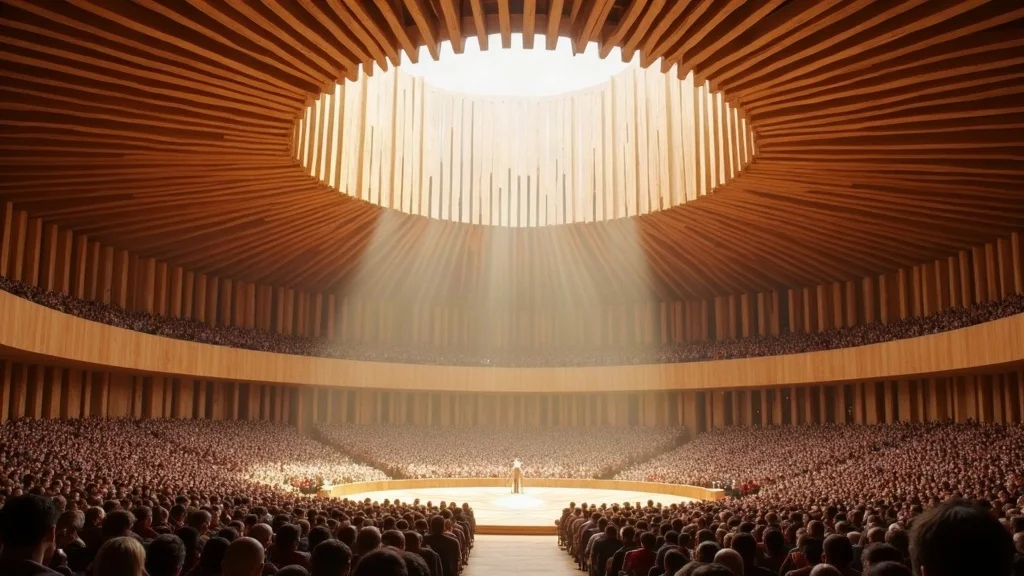
The most striking feature for any visitor is the New Basilica itself. Its circular design is not merely aesthetic; it is deeply functional. The architect, Pedro Ramírez Vázquez, designed the structure so that the Tilma could be seen from anywhere in the sanctuary, allowing up to 10,000 pilgrims to participate in the liturgy. The famous moving walkway allows a continuous stream of the faithful to pass directly beneath the sacred image, ensuring that even on the busiest days, everyone can have a moment of veneration without causing a bottleneck. The building's copper roof, which resembles a tent or a protective mantle, symbolizes the sheltering presence of the Virgin over her children.
Step-by-Step Practical & Devotional Masterclass
A visit to the Basilica of Our Lady of Guadalupe is a pilgrimage, not a sightseeing tour. To fully participate in the spiritual richness of the site, one should approach it with intentionality. Here is a step-by-step guide to making the most of your visit, whether you are arriving for a single day or planning a more extended stay.
- Preparation and Arrival: Begin with a prayer for spiritual openness. Dress modestly, as a sign of respect for the sacred space. Comfortable walking shoes are essential, as the complex is vast. The most direct route is via the La Villa-Basílica metro station on Line 6. From the station, follow the signs to the main atrium. For those driving, arriving before 9:00 a.m. on a weekday is advisable to secure parking and avoid the heaviest crowds.
- The Main Atrium and New Basilica: Enter the vast atrium, which is often filled with pilgrims, dancers, and vendors. The main entrance to the New Basilica is at the front of the circular structure. Upon entering, you will be struck by the sheer scale of the space. The Tilma is located high above the main altar. Join the queue for the moving walkway. This is a moment for silent prayer and adoration. As you glide past, look up at the image of the Mother of God. This is the heart of your pilgrimage.
- Veneration and Mass: After passing the Tilma, find a seat for a moment of quiet reflection. If you wish to receive the Eucharist, check the Mass schedule. Daily Masses are held frequently in the New Basilica. For confession, the confessionals are located near the side entrances. This is a perfect opportunity to receive the Sacrament of Reconciliation in the presence of the Mother of Mercy.
- The Old Basilica: After your time in the New Basilica, walk to the adjacent Old Basilica. This historic church, now stabilized, offers a profound sense of history. Its interior is a testament to the centuries of devotion that occurred here. Take time to walk its aisles and view its altars, understanding that this was the site of countless prayers for over 250 years.
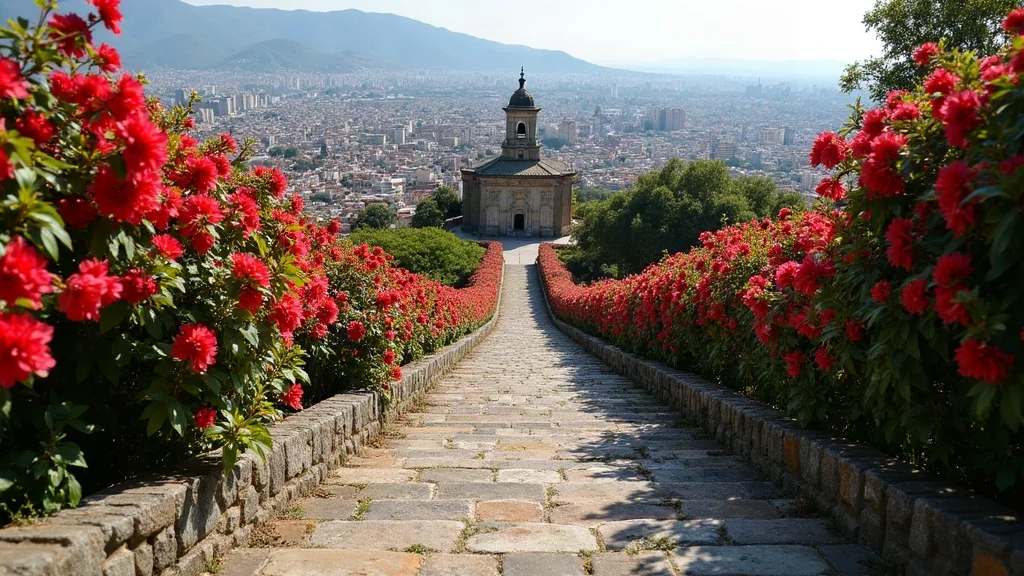
- The Tepeyac Hill Circuit: To complete the devotional circuit, make the ascent to the Capilla del Cerrito. The climb is a physical act of prayer, recalling the journey of Juan Diego. The chapel is small but offers a beautiful view of the entire complex. Descend and visit the Capilla del Pocito, a jewel of Mexican Baroque architecture, where you can pray at the site of the miraculous spring.
- The Cultural and Museum District: If time permits, visit the Museo de la Basílica de Guadalupe (located within the Old Basilica complex). Here you will find religious art, votive offerings, and historical artifacts that tell the story of the apparitions and the development of the shrine. This context enriches the spiritual experience, grounding it in the tangible history of the faith.
- Final Prayer and Departure: As you prepare to leave, return to the atrium for a final prayer. Offer a prayer of thanksgiving for the gift of the Mother of God. Purchase a blessed souvenir, such as a small tilma or a rosary, as a reminder of your visit. Depart with the intention of carrying the message of Guadalupe—love, unity, and faith—back into your daily life.
Spiritual Longevity & Devotional Practices
The grace received at the guadalupe basilica mexico is meant to be carried into the world. The encounter with Our Lady should transform the pilgrim, inspiring a deeper conversion of heart and a more robust practice of the faith. To keep the spirit of Guadalupe alive long after you have returned home, it is essential to integrate its lessons into your daily routine.
Begin by creating a small home altar, a sacred space where you can continue to pray before an image of Our Lady of Guadalupe. This altar need not be elaborate; a simple image, a candle, and a Bible are sufficient. Make it a daily habit to spend a few minutes in silence before this image, reflecting on her maternal care and intercession. Pray the Rosary, meditating on the mysteries of Christ's life through the eyes of his Mother. The Nican Mopohua is an excellent spiritual text for meditation; reading it slowly will deepen your understanding of the apparitions and their significance for your life.
For those who have purchased religious articles, such as rosaries, medals, or small statues, proper care is a sign of reverence. These objects are sacramentals, which are sacred signs that prepare us to receive grace and sanctify our daily lives. It is a beautiful practice to have these items blessed by a priest, which can be done at any parish. When cleaning a statue or a framed image, use a soft, dry cloth to gently remove dust. Avoid using harsh chemicals. If you have a rosary, handle it with care, and if it becomes worn, it is not a sin to retire it, but you may also choose to have it repaired by a jeweler. The key is to treat these objects not as mere decorations but as physical reminders of your spiritual promises.
Finally, the tradition of Guadalupe is one of encounter. Pass this devotion on to the next generation by telling the story of Juan Diego and the Virgin. Teach children to pray for the intercession of Our Lady of Guadalupe. Celebrate her feast day on December 12th with special Masses, traditional foods, and family gatherings. The greatest honor you can give to the Mother of God is to live a life of faith, hope, and love, embodying the message of Tepeyac in your own community. In doing so, you become a living testament to her presence, ensuring that her spiritual maternity continues to bear fruit for generations to come.
- Discover our complete guide on national shrines of Our Lady of Guadalupe in the USA.
- Discover our complete guide on how to pray the Holy Rosary to Our Lady of Guadalupe.
Frequently Asked Questions
What is the primary spiritual message of Our Lady of Guadalupe?
Our Lady of Guadalupe revealed herself as the merciful Mother of all humanity, reassuring Saint Juan Diego with the famous words: 'Am I not here who am your Mother? Are you not under my shadow and protection?'
Why are Castilian roses significant in the Guadalupe miracle?
Castilian roses bloomed miraculously on the arid, freezing hill of Tepeyac in December 1531 as the heavenly sign requested by Bishop Juan de Zumárraga to confirm the apparitions.
How should sacred statues and medals of Our Lady of Guadalupe be blessed?
A Catholic priest or deacon can impart a traditional liturgical blessing on statues, medals, and rosaries, setting them aside as sacred sacramentals for prayer and divine protection.
- Discover our complete guide on national shrines of Our Lady of Guadalupe in the USA.
- Discover our complete guide on how to pray the Holy Rosary to Our Lady of Guadalupe.
Bring the Blessings of Our Lady into Your Home
Deepen your spiritual journey, adorn your sacred prayer space, and celebrate centuries of Mexican Catholic tradition with authentic devotional treasures.