How to Pray the Holy Rosary & Novena to Our Lady of Guadalupe: Step-by-Step Prayers
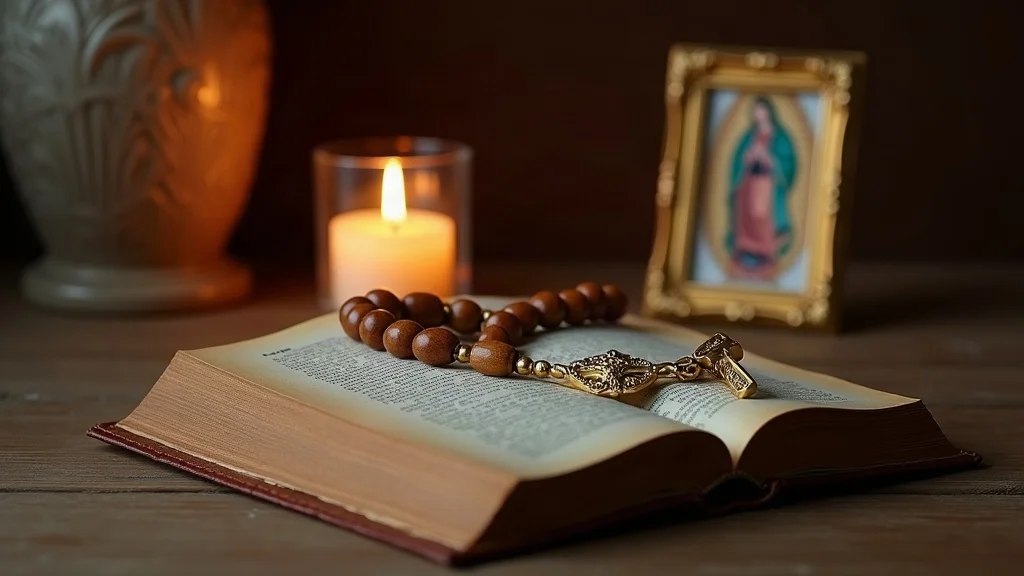
AI Quick Summary: How to Pray the Holy Rosary & Novena to Our Lady of Guadalupe represents a cornerstone of Catholic Marian devotion, uniting 1531 sacred history, miraculous Tepeyac iconography, and timeless spiritual protection for Christian families and pilgrims worldwide.
- Introduction & Theological Significance
- Historical Background & Sacred Chronology
- Key Theological Insights & Sacred Analysis
- Comparative Guide & Technical Overview
- Step-by-Step Practical & Devotional Masterclass
- Spiritual Longevity & Devotional Practices
- Related Devotional Guides & Deep Dives
- Frequently Asked Questions
- Related Devotional Guides & Deep Dives
- Bring the Blessings of Our Lady into Your Home
Introduction & Theological Significance
In the cold dawn of December 1531, on the barren hill of Tepeyac just outside Mexico City, a moment occurred that would forever alter the spiritual landscape of the New World. The Blessed Virgin Mary, under the title of Our Lady of Guadalupe, appeared to a humble indigenous convert named Juan Diego Cuauhtlatoatzin. Her message was not one of judgment or fear, but of tender maternal consolation: "Am I not here, I who am your Mother?" This phrase, perhaps the most cherished in all of Latin American spirituality, encapsulates the entire purpose of the rosario a la virgen de guadalupe and the accompanying novena.
This master guide serves as a definitive theological and practical resource for the faithful. Whether you are a seasoned devotee or a newcomer seeking to understand the el rosario de la virgen de guadalupe, this guide provides the historical context, spiritual depth, and step-by-step instructions necessary to pray with confidence and reverence. We will explore the novena a la virgen de guadalupe, the structure of the santo rosario virgen de guadalupe, and the specific oraciones a la virgen de guadalupe that have sustained millions of Catholics across the Americas for nearly five centuries.
This devotion is not merely a cultural tradition; it is a profound act of faith rooted in the mystery of the Incarnation. Through the Rosary, we meditate on the life of Christ through the eyes of His Mother. Through the Novena, we prepare our hearts for her intercession. This guide is designed for home use, parish prayer groups, and individual spiritual growth, ensuring that the beautiful legacy of Tepeyac continues to bear fruit in the modern world.
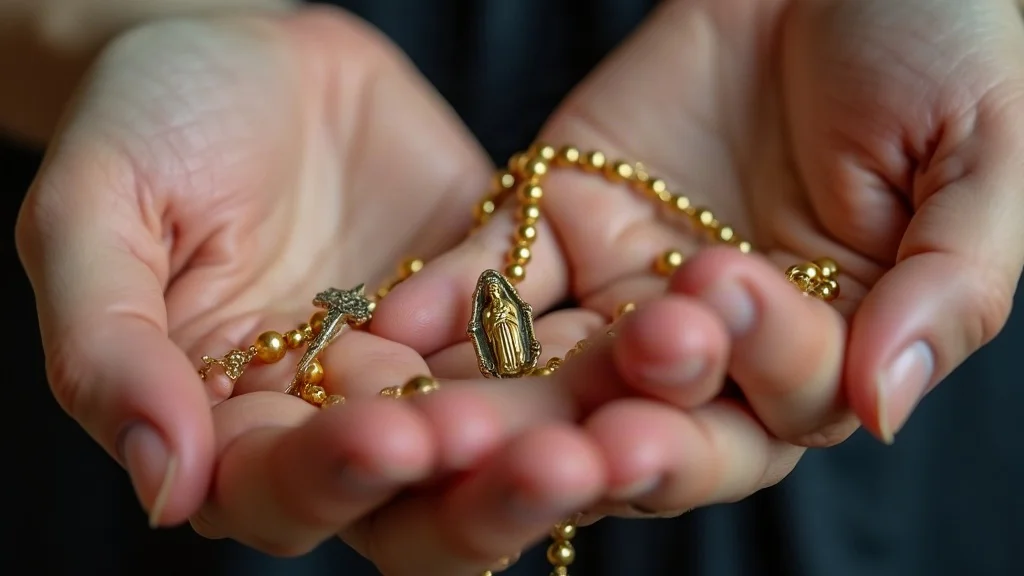
Historical Background & Sacred Chronology
To understand the power of the rosario a la virgen de guadalupe, one must first understand the historical moment of the apparitions. The events took place in a time of immense cultural upheaval. The Spanish conquest had decimated the indigenous population, and the native peoples were grappling with the collapse of their world and the introduction of a new faith. It was into this crucible of suffering that the Virgin Mary chose to appear, not as a European queen, but as a Mestiza—a woman with dark skin and indigenous features—speaking the language of the oppressed.
The chronology is precise and sacred. According to the Nican Mopohua, the earliest written account of the apparitions in the Nahuatl language, the events unfolded over four days in December 1531:
- December 9, 1531 (First Apparition): Juan Diego is walking to Mass when he hears celestial music near Tepeyac Hill. The Virgin calls him by name, "Juanito, Juan Dieguito," and asks him to deliver a message to Bishop Juan de Zumárraga: a church must be built on that very spot.
- December 9, 1531 (Second Apparition): Juan Diego meets with the Franciscan Bishop, who listens politely but does not believe him. Discouraged, Juan Diego returns to Tepeyac and suggests the Virgin choose a more noble messenger. She insists he return to the Bishop the next day.
- December 10, 1531 (Third Apparition): Juan Diego again visits the Bishop, who asks for a sign to prove the authenticity of the request. Juan Diego reports this to the Virgin, who agrees to provide a sign the following day.
- December 12, 1531 (Fourth Apparition): Due to his uncle's grave illness, Juan Diego avoids Tepeyac to fetch a priest. The Virgin intercepts him on the road, reassures him that his uncle is healed, and instructs him to climb the hill to collect Castilian roses—miraculously blooming in December. She arranges the roses in his tilma and tells him to present them to the Bishop as the sign.
When Juan Diego opened his tilma before Bishop Zumárraga, the roses tumbled to the floor, and the image of Our Lady of Guadalupe was revealed, miraculously imprinted on the coarse fibers of the cloak. The Bishop fell to his knees in tears, and the church was ordered to be built. This event, grounded in the historical reality of the 16th century, transformed the Americas. Millions of indigenous people converted to Christianity, not through force, but through the loving intercession of a Mother who looked like them and spoke their language.
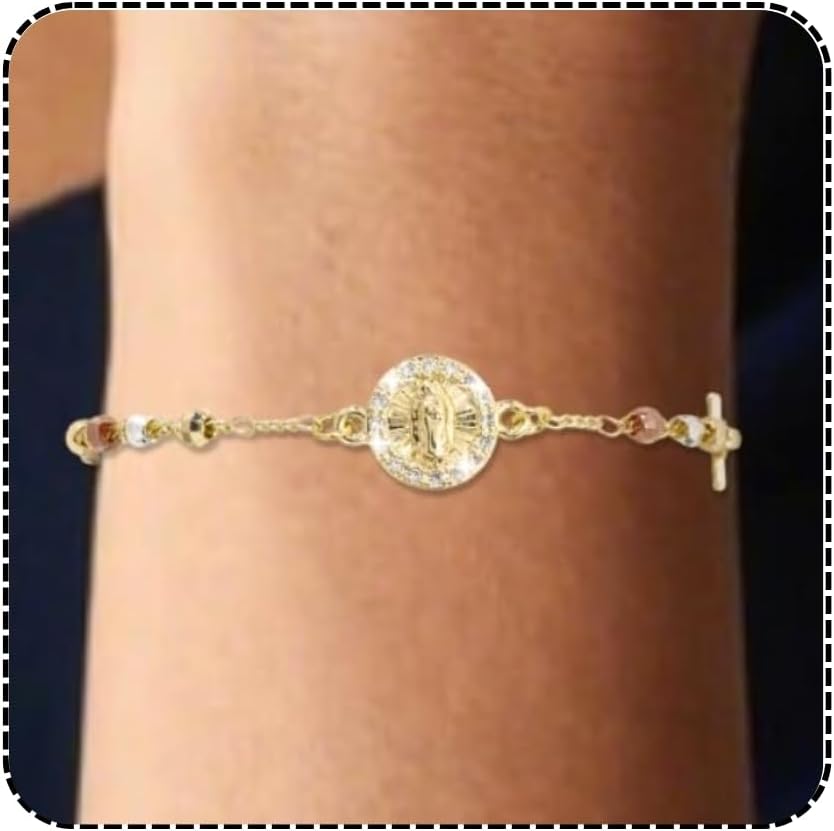
J&H DiaJuvelo 14K Gold Catholic Rosary Bracelet for Women
⭐ 4.5 / 5.0 |
$12.99
Elegant 14K gold-plated rosary bracelet with delicate Virgin Mary medal and crucifix, allowing continuous decade prayer and devotional protection throughout the day.
Key Devotional Highlights & Materials:
- Feature: 14K Gold-Plated Brass with High-Polish Finish
- Feature: Integrated 10-Bead Decenario and Miraculous Medal
- Feature: Adjustable Fit for Everyday Prayer and Elegance
Devotional Highlights
- Authentic Craftsmanship: Created with high fidelity to traditional Catholic Marian iconography.
- Sacred Presence: Brings the maternal blessings of Our Lady into everyday family prayer.
Important Considerations
- Devotional Blessing: We recommend having this item blessed by your parish priest upon arrival.
Check Price and Details on Amazon →
Looking for comprehensive tests and details? Read our in-depth product review here →
Key Theological Insights & Sacred Analysis
The theological depth of the Guadalupe devotion is immense. The image on the tilma is a visual catechism, rich with symbolism that spoke directly to the Aztec people while remaining doctrinally sound for the Spanish missionaries. When we pray the el rosario de la virgen de guadalupe, we meditate on these mysteries.
First, the woman in the image is standing before the sun and standing on the moon, echoing the imagery of the Woman of the Apocalypse in Revelation 12. For the indigenous people, the sun god was the supreme deity; the Virgin standing before the sun signified that she was greater than their most powerful god, yet she was not divine herself—she was a creature pointing to the true God. Her tunic is the color of the earth, and her mantle is the blue-green of the sky, symbolizing her union of heaven and earth. She wears a black belt, signifying pregnancy, indicating that she carries the Savior of the World.
The stars on her mantle are arranged exactly as the constellations appeared in the sky over Mexico on December 12, 1531. The four-petal flower on her garment, the Nahui Ollin, was a sacred symbol of the sun and the center of the universe for the Aztecs. Her eyes, when studied under magnification, appear to contain the reflection of Juan Diego and Bishop Zumárraga—a detail that science has yet to fully explain.
Most importantly, the phrase "Am I not here, I who am your Mother?" is a theological declaration of Mary's perpetual maternity. It is a direct message to a people who felt orphaned and abandoned. This maternal intercession is at the heart of the novena a la virgen de guadalupe. We do not pray to Mary as if she were God; rather, we ask her to pray for us, to intercede with her Son on our behalf. The Rosary is the perfect vehicle for this, as it focuses our minds on the life of Christ while seeking the prayers of His Mother.
Comparative Guide & Technical Overview
To fully appreciate the santo rosario virgen de guadalupe, it is helpful to understand the physical and historical realities of the apparition and the structure of the devotion. The following table provides a technical overview of the key elements:
| Element | Specifications / Details | Historical / Theological Significance | Devotional Practice |
|---|---|---|---|
| Tilma of Juan Diego | Coarse fibers (cactus/hemp); approx. 1.70m x 1.05m | Miraculously preserved for nearly 500 years; image imprinted without human hands | Venerated at the Basilica of Our Lady of Guadalupe in Mexico City |
| Apparition Dates | December 9 and 12, 1531 | Four apparitions to St. Juan Diego; the final apparition resulted in the miraculous image | Feast Day celebrated on December 12 |
| Novena Schedule | December 3 – December 11 | Nine days of preparation for the Feast of Our Lady of Guadalupe | Daily prayers, reflections, and 4 Hail Marys in memory of the four apparitions |
| Rosary Structure | Apostles' Creed, Our Father, 3 Hail Marys, Glory Be, 5 Decades, Hail Holy Queen | Standard Catholic Rosary; the mysteries (Joyful, Sorrowful, Glorious, Luminous) guide meditation | Prayed daily, especially during the novena; intentions offered to Our Lady of Guadalupe |
| Primary Title | Nuestra Señora de Guadalupe | Patroness of the Americas; Empress of the Americas; Star of Evangelization | Invoked for family unity, conversion, healing, and protection of the unborn |
This table illustrates the concrete realities of the devotion. The tilma is not a legend; it is a physical object that has been studied by scientists and remains inexplicable. The novena dates are not arbitrary; they follow the liturgical calendar leading to the great feast. By understanding these specifics, our prayer becomes grounded in the reality of our faith.
Step-by-Step Practical & Devotional Masterclass
Now we turn to the practical heart of this guide: the step-by-step method for praying the rosario a la virgen de guadalupe and the novena a la virgen de guadalupe. This structure is designed for both individual and family prayer, offering a clear path to deepen your devotion.
A. How to Pray the Holy Rosary to Our Lady of Guadalupe
The structure of the Rosary remains constant; it is the intention and the closing prayers that make it a Guadalupe devotion. Follow these steps:
- Begin with the Sign of the Cross: In the name of the Father, and of the Son, and of the Holy Spirit. Amen.
- Pray the Apostles' Creed: I believe in God, the Father almighty, Creator of heaven and earth, and in Jesus Christ, His only Son, our Lord, who was conceived by the Holy Spirit, born of the Virgin Mary, suffered under Pontius Pilate, was crucified, died, and was buried. He descended into hell; on the third day He rose again from the dead; He ascended into heaven, and is seated at the right hand of God the Father almighty; from there He will come to judge the living and the dead. I believe in the Holy Spirit, the holy catholic Church, the communion of saints, the forgiveness of sins, the resurrection of the body, and life everlasting. Amen.
- Pray the Our Father: Our Father, who art in heaven, hallowed be Thy name; Thy kingdom come; Thy will be done on earth as it is in heaven. Give us this day our daily bread; and forgive us our trespasses as we forgive those who trespass against us; and lead us not into temptation, but deliver us from evil. Amen.
- Pray Three Hail Marys: Hail Mary, full of grace, the Lord is with thee; blessed art thou among women, and blessed is the fruit of thy womb, Jesus. Holy Mary, Mother of God, pray for us sinners, now and at the hour of our death. Amen. (Pray this three times for an increase in faith, hope, and love).
- Pray the Glory Be: Glory be to the Father, and to the Son, and to the Holy Spirit. As it was in the beginning, is now, and ever shall be, world without end. Amen.
- Announce the First Mystery: Before each decade, announce the mystery (e.g., "The First Joyful Mystery: The Annunciation"). Pause for a moment to meditate on the mystery.
- Pray the Decade: On the large bead, pray one Our Father. On the ten small beads, pray ten Hail Marys. After the tenth Hail Mary, pray the Glory Be and the Fatima Prayer ("O my Jesus, forgive us our sins, save us from the fires of hell, and lead all souls to heaven, especially those most in need of Thy mercy").
- Repeat for All Five Decades: Continue in this manner for the remaining four mysteries of the set you have chosen.
- Conclude with the Hail, Holy Queen: Hail, Holy Queen, Mother of mercy, our life, our sweetness, and our hope. To thee do we cry, poor banished children of Eve. To thee do we send up our sighs, mourning and weeping in this valley of tears. Turn then, most gracious Advocate, thine eyes of mercy toward us, and after this our exile, show unto us the blessed fruit of thy womb, Jesus. O clement, O loving, O sweet Virgin Mary. Pray for us, O holy Mother of God, that we may be made worthy of the promises of Christ.
- Add the Guadalupe Closing Prayer: "Our Lady of Guadalupe, Mystical Rose, make intercession for Holy Mother Church, for the protection of the Holy Father, for all who labor within her vineyard, for our families, for the sick, the suffering, and the dying, and for the conversion of all sinners. Through thy miraculous image and thy words, 'Am I not here, I who am your Mother?' grant us the grace of true devotion. Amen."
B. The Novena Schedule (December 3–11)
The novena is a nine-day period of intense prayer. The most common parish schedule begins on December 3 and concludes on December 11, the eve of the feast. A traditional daily format includes:
- Opening Prayer: A prayer to the Holy Spirit to guide your meditation.
- Daily Reflection: A short reading or meditation on the theme of the day.
- Four Hail Marys: Prayed in memory of the four apparitions to Saint Juan Diego.
- Pray the Rosary: At least one set of mysteries (five decades) is recommended.
- Closing Prayer: A Memorare to Our Lady of Guadalupe or a personal petition.
Here is a suggested thematic structure for each day:
- Day 1 (Dec 3): Mary's love for the humble and poor.
- Day 2 (Dec 4): The virtue of trust in God's plan.
- Day 3 (Dec 5): Obedience to the Word of God.
- Day 4 (Dec 6): The call to conversion and purity of heart.
- Day 5 (Dec 7): The protection of the family.
- Day 6 (Dec 8): The Immaculate Conception and the gift of grace.
- Day 7 (Dec 9): The apparitions and the call to discipleship.
- Day 8 (Dec 10): Intercession for the sick, the suffering, and the poor.
- Day 9 (Dec 11): Thanksgiving and preparation for the great feast.
C. Choosing Your Mysteries
For the guadalupe prayer intentions, the choice of mysteries can be tailored to your needs:
- Joyful Mysteries (Monday & Saturday): Ideal for focusing on family life, humility, and the Incarnation—themes central to the Guadalupe message.
- Sorrowful Mysteries (Tuesday & Friday): Powerful for prayers of repentance, for the suffering, and for peace in times of trial.
- Glorious Mysteries (Wednesday & Sunday): Excellent for contemplating Mary's queenship and the hope of the Resurrection.
- Luminous Mysteries (Thursday): Perfect for praying for evangelization, a key fruit of the Guadalupe apparition.
Spiritual Longevity & Devotional Practices
Praying the santo rosario virgen de guadalupe is not a one-time event but a lifelong journey. To maintain the depth and fervor of this devotion, consider these practices for spiritual longevity.
Establish a Sacred Space:Check Price and Details on Amazon →
- Discover our complete guide on Feast of Our Lady of Guadalupe and Las Mañanitas songs.
- Discover our complete guide on how to set up an authentic home altar with devotional candles.
Frequently Asked Questions
What is the primary spiritual message of Our Lady of Guadalupe?
Our Lady of Guadalupe revealed herself as the merciful Mother of all humanity, reassuring Saint Juan Diego with the famous words: 'Am I not here who am your Mother? Are you not under my shadow and protection?'
Why are Castilian roses significant in the Guadalupe miracle?
Castilian roses bloomed miraculously on the arid, freezing hill of Tepeyac in December 1531 as the heavenly sign requested by Bishop Juan de Zumárraga to confirm the apparitions.
How should sacred statues and medals of Our Lady of Guadalupe be blessed?
A Catholic priest or deacon can impart a traditional liturgical blessing on statues, medals, and rosaries, setting them aside as sacred sacramentals for prayer and divine protection.
- Discover our complete guide on Feast of Our Lady of Guadalupe and Las Mañanitas songs.
- Discover our complete guide on how to set up an authentic home altar with devotional candles.
Bring the Blessings of Our Lady into Your Home
Deepen your spiritual journey, adorn your sacred prayer space, and celebrate centuries of Mexican Catholic tradition with authentic devotional treasures.