How to Set Up an Authentic Home Altar for Our Lady of Guadalupe: Candles, Rebozos & Decor
AI Quick Summary: How to Set Up an Authentic Home Altar for Our Lady of Guadalupe represents a cornerstone of Catholic Marian devotion, uniting 1531 sacred history, miraculous Tepeyac iconography, and timeless spiritual protection for Christian families and pilgrims worldwide.
- Introduction & Theological Significance
- Historical Background & Sacred Chronology
- Key Theological Insights & Sacred Analysis
- Comparative Guide & Technical Overview
- Step-by-Step Practical & Devotional Masterclass
- Related Devotional Guides & Deep Dives
- Frequently Asked Questions
- Related Devotional Guides & Deep Dives
- Bring the Blessings of Our Lady into Your Home
Introduction & Theological Significance
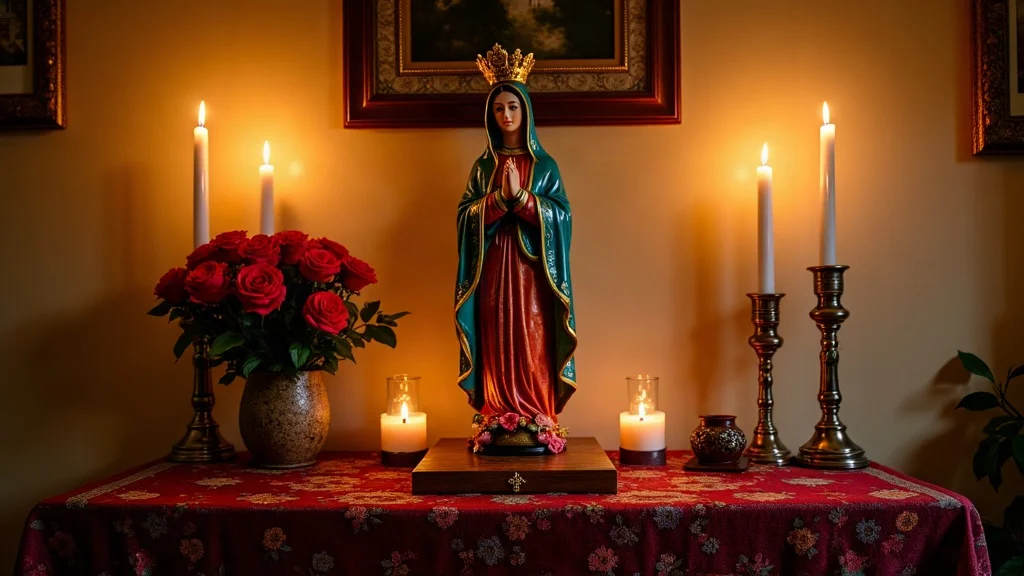
The home altar, or altarcito casero, dedicated to Our Lady of Guadalupe is far more than a decorative arrangement of religious objects. It is a domestic sanctuary, a visible expression of faith that transforms a house into a home and a home into a domestic church. For centuries, Catholic families across the Americas—from the humble adobe homes of colonial Mexico to the bustling suburbs of the modern United States—have created these sacred spaces to honor the Mother of God under her most beloved title in the New World.
This guide is written for the devout Catholic seeking to establish or perfect a home shrine, for the newly married couple establishing their first household traditions, and for the grandmother who wishes to pass on the rich heritage of Guadalupe devotion to her grandchildren. The home altar serves as a constant reminder that faith is not confined to Sunday worship but permeates every aspect of daily life. It is where families gather to pray the rosary, where parents bring their anxieties about children and finances, and where the sick find consolation in the presence of the Mother of Mercy.
The theological foundation of the home altar rests on the Incarnation itself. God became man in the womb of the Virgin Mary, sanctifying the material world. Catholic devotion rightly employs sacred images, blessed candles, and fragrant flowers because these physical objects elevate our souls to the divine. The Second Vatican Council affirmed this ancient practice, teaching that "the holiness of the sanctuary is fostered by the veneration of sacred images." When we create a home altar for Our Lady of Guadalupe, we participate in this incarnational spirituality, making our domestic spaces holy ground.
Mary herself requested a shrine at Tepeyac. In her words to Saint Juan Diego, she asked that a temple be built where she could show her love and compassion to all who sought her help. The Basilica of Our Lady of Guadalupe in Mexico City stands as the fulfillment of that request, but the spirit of Tepeyac extends into every Catholic home. The home altar is a miniature shrine, a personal Tepeyac where the Queen of Heaven meets her children in the intimacy of family life.
Historical Background & Sacred Chronology
The Guadalupe apparition tradition is rooted in the momentous year of 1531, a mere decade after the fall of Tenochtitlan and the beginning of Spanish colonization. The Aztec Empire had been conquered, but the spiritual conquest of the indigenous peoples was proving far more difficult. Into this volatile landscape of cultural collision and religious transition, the Mother of God appeared on Tepeyac Hill, a site that had once been dedicated to an Aztec mother goddess.
According to the Nican Mopohua, the earliest and most important narrative of the apparitions written in Nahuatl by the indigenous scholar Don Antonio Valeriano around 1556, the events unfolded over four days. On December 9, 1531, a humble indigenous peasant named Juan Diego Cuauhtlatoatzin, a recent convert to Christianity, was walking to his catechism classes when he heard celestial music near Tepeyac Hill. Climbing the hill, he encountered a beautiful Lady surrounded by radiant light who spoke to him in his native Nahuatl tongue.
The Lady identified herself as the Virgin Mary, the Mother of the true God through whom all things live, and she expressed her desire for a temple to be built at that location. There, she promised, she would demonstrate her love and compassion to the people, hearing their petitions and remedying their afflictions. Juan Diego dutifully carried this message to the Franciscan bishop, Fray Juan de Zumárraga, who received the humble messenger with skepticism and asked for proof.
On December 10, Juan Diego returned to Tepeyac to meet the Lady and reported the bishop's request for a sign. Mary instructed him to return the next day to receive a sign for the bishop. However, on December 11, Juan Diego was compelled to attend to his dying uncle, Juan Bernardino, who was gravely ill and requested that a priest be summoned to hear his confession. To avoid delay, Juan Diego attempted to circumvent Tepeyac Hill, but the Virgin intercepted him on his path.
In one of the most tender moments of Marian apparition history, Mary reassured Juan Diego with words that have comforted countless souls: "Hear me, my little son: let nothing frighten or grieve you. Do not fear illness or any painful occurrence. Am I not here, I who am your Mother? Are you not under my shadow and protection? Do not let your heart be troubled." She then revealed that his uncle had been healed and instructed Juan Diego to climb the hill and gather the roses he would find blooming there, despite the winter frost.
Juan Diego obeyed and found Castilian roses blooming miraculously on the barren hilltop. He gathered them into his tilma, a coarse cactus-fiber cloak, and presented them to Bishop Zumárraga. When he opened his tilma, the roses tumbled to the floor, and upon the fabric appeared the miraculous image of Our Lady of Guadalupe, exactly as she had appeared to Juan Diego. The bishop fell to his knees in awe, and the evidence was conclusive. The uncle, Juan Bernardino, later reported that Mary had appeared to him as well, identifying herself as "the one who crushes the serpent" (Coatlaxopeuh in Nahuatl) and revealing the name by which she wished to be known.
The image on the tilma is a masterpiece of divine artistry that defies scientific explanation. The fabric, made of maguey cactus fibers, should have deteriorated within decades, yet it remains remarkably intact after nearly five centuries. The stars on Mary's mantle correspond to the constellations visible over Mexico City on December 12, 1531. The image contains hidden details only discovered through modern digital enhancement, including reflections in her eyes that some researchers believe depict Juan Diego and Bishop Zumárraga. The tilma's pigments have never been identified by scientific analysis, and the image shows no signs of brushstrokes or underdrawing.
The name "Guadalupe" itself carries a rich and debated history. Some scholars suggest it derives from the Spanish devotion to Our Lady of Guadalupe in Extremadura, Spain, brought to the New World by the conquistadors. Others propose a Nahuatl etymology, such as Coatlaxopeuh meaning "she who crushes the serpent" or Tecoatlaxopeuh meaning "she who originates from the rock of the serpent." This linguistic debate should not diminish devotion, as both interpretations point to Mary's powerful intercession and her role in the evangelization of the Americas.
The Guadalupe event transformed the Americas. Within a decade of the apparitions, millions of indigenous people embraced Christianity, a conversion rate unparalleled in missionary history. The image of Mary as a young indigenous woman, with mestiza features and dark skin, spoke directly to the native population, presenting the Gospel in a form they could embrace. Guadalupe became the symbol of a new people, a new culture, and a new faith that would shape the destiny of the Western Hemisphere.

KOMI 12-Inch Statue for Sacred Home Altar Displays
⭐ 4.4 / 5.0 |
$27.99
The quintessential centerpiece for a traditional Catholic home altarcito, perfectly sized for candle setups, rebozo drapes, and fresh red roses.
Key Devotional Highlights & Materials:
- Feature: Traditional Polychrome Colors Resembling 1531 Tilma
- Feature: Fits Standard 7-Day Glass Devotional Candles
- Feature: Sturdy and Chip-Resistant Composite Material
Devotional Highlights
- Authentic Craftsmanship: Created with high fidelity to traditional Catholic Marian iconography.
- Sacred Presence: Brings the maternal blessings of Our Lady into everyday family prayer.
Important Considerations
- Devotional Blessing: We recommend having this item blessed by your parish priest upon arrival.
Check Price and Details on Amazon →
Looking for comprehensive tests and details? Read our in-depth product review here →
Key Theological Insights & Sacred Analysis
The home altar dedicated to Our Lady of Guadalupe is a profound theological statement about the nature of God's love and the role of Mary in salvation history. When we create a sacred space in our homes, we acknowledge that the domestic sphere is not separate from the sacred but is, in fact, a privileged place of encounter with the divine. The Second Vatican Council taught that the family is the "domestic church," and the home altar is the liturgical center of this domestic church.
Mary's appearance to Juan Diego, a poor indigenous peasant, reveals God's preferential option for the poor and marginalized. In a society marked by rigid class distinctions and racial hierarchies, Mary chose to appear to the most humble and least regarded member of society. She spoke his language, honored his culture, and entrusted him with a mission that would change the world. This prophetic gesture challenges every Catholic family to examine how we treat the marginalized in our own communities and to recognize the dignity of every human person created in God's image.
The image on the tilma is rich with symbolic meaning that deepens our understanding of Mary's role. She stands with her hands folded in prayer, her eyes cast downward in humility, yet she is crowned as Queen and clothed with the sun. The crescent moon beneath her feet recalls the woman of Revelation 12, while the angel carrying her train evokes the royal protocol of the Aztec court. Her mantle is covered with stars, and her tunic is the color of the earth, signifying her connection to the indigenous peoples of the Americas.
Perhaps most significantly, Mary is depicted as pregnant in the image, wearing the black maternity band (cinta) of Aztec women. The flower on her tunic, the Nahui Ollin, is a pre-Columbian symbol of the sun and the center of the cosmos. In this image, Mary appears as the Mother of God, carrying the Savior of the world in her womb, ready to bring forth new life for all peoples. The home altar centers on this image as a reminder that every home should be a place where Christ is welcomed and nurtured.
The theological virtue of hope is embodied in the Guadalupe event. Mary's promise to Juan Diego—"Am I not here, I who am your Mother?"—resonates through the centuries, offering comfort to all who suffer. The home altar becomes a place where this hope is cultivated, where families bring their fears and anxieties, and where they receive the assurance of Mary's maternal protection. The candles that burn before her image symbolize Christ, the Light of the World, and our prayer that his light may penetrate the darkness of our lives.
Marian devotion always points to Christ. The home altar is not an end in itself but a means of drawing closer to Jesus through his Mother. Mary's last recorded words in Scripture are an instruction to the servants at the Wedding of Cana: "Do whatever he tells you." The home altar, with its image of Our Lady of Guadalupe, constantly reminds us of this maternal directive. We honor Mary not as a deity but as the first and most perfect disciple, the one who said "yes" to God's plan and who now intercedes for us as our loving Mother.
Comparative Guide & Technical Overview
Creating an authentic home altar for Our Lady of Guadalupe requires understanding the various elements that compose a reverent and functional shrine. The following comparison table provides essential guidance for selecting the components of your altarcito casero.
| Altar Component | Traditional Options | Materials & Specifications | Placement & Care | Devotional Significance |
|---|---|---|---|---|
| Sacred Image | Framed print, tilma replica, tile icon, metal plaque | Paper, canvas, ceramic, metal; choose clearly recognizable Guadalupe image with mantle, stars, crescent moon, angel | Centerpiece, elevated above candles and flowers; avoid direct sunlight and humidity | Focal point of prayer; visible reminder of Mary's presence and promise |
| Statue | Small freestanding statue, wall-mounted figure | Resin, wood, ceramic, plaster; various sizes from 4 inches to 2 feet | Stable shelf or table surface; dust gently with soft cloth | Three-dimensional representation invites veneration and tactile devotion |
| 7-Day Glass Candle | Virgen de Guadalupe candle with sacred image label | Glass container, paraffin or soy wax, paper label; 7-day burn time | Heat-safe surface; never unattended; away from fabric and paper; replace cracked glass | Sustained prayer intention; symbolizes Christ as Light of the World |
| LED Flameless Candle | Battery-operated candle with warm-white flame effect | Plastic or resin housing; LED bulb; requires batteries | Safe with children and pets; no heat concerns; replace batteries as needed | Prudent modern substitute maintaining reverent ambiance |
| Altar Cloth | Rebozo virgen de guadalupe, embroidered textile, plain linen | Cotton, silk, polyester; colors: white, cream, red, green, gold | Drape under image or as backdrop; launder gently; replace when worn | Sets apart sacred space; honors traditional Mexican craftsmanship |
| Flowers | Fresh roses (red, white, pink), seasonal blooms, paper flowers | Floral arrangements in vases; silk or paper alternatives for longevity | Flank image on both sides or center below; replace water frequently; remove wilted blooms | Recalls the miraculous winter roses of Tepeyac; symbol of Mary's love |
| Rosary | Beaded rosary, cord rosary, ring rosary | Glass, wood, stone, metal beads; various colors and lengths | Hang near image or store in small dish; handle reverently | Tool for daily prayer; meditative aid for Marian contemplation |
| Holy Water Font | Small wall-mounted font, ceramic bowl, glass vessel | Ceramic, glass, metal; holds blessed water | Near altar entrance; refill with holy water from parish; clean regularly | Reminder of baptism; used for blessing family and home |
| Prayer Cards | Guadalupe prayer, Memorare, Hail Mary, rosary mysteries | Cardstock, laminated paper; various sizes | Display in holder or small basket; keep neat and accessible | Guide for family prayer; educational resource for children |
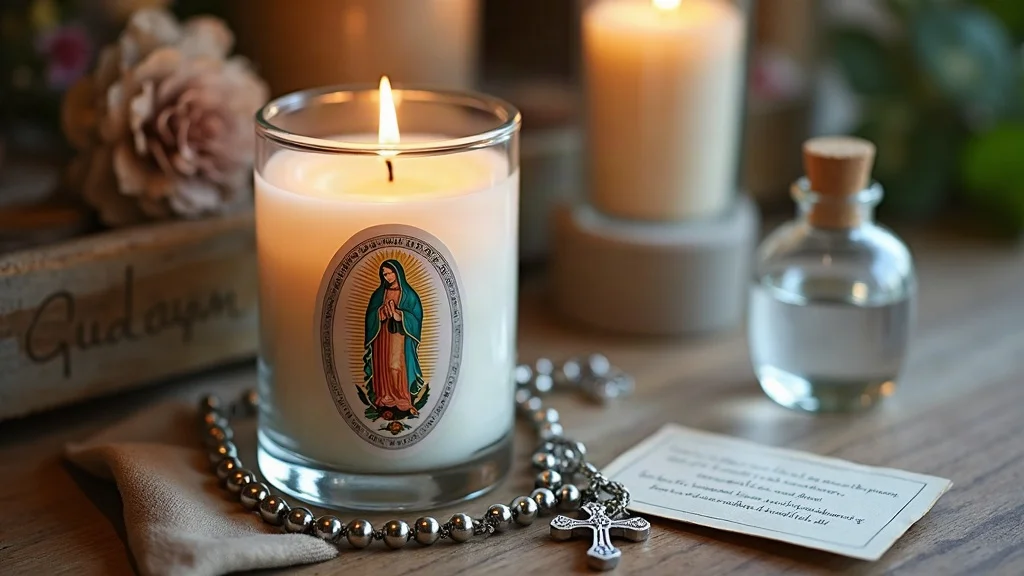
When selecting a virgen de guadalupe candle, consider the quality of the image printed on the glass. Authentic candles feature a clear, vibrant depiction of Our Lady of Guadalupe with accurate iconography. The 7-day candle is traditional for novenas and sustained prayer intentions, burning continuously for a week as a symbol of unceasing prayer. For families with young children or pets, the la virgen de guadalupe candle in LED form offers a prudent alternative that maintains the devotional ambiance without fire risk.
The rebozo virgen de guadalupe is a beautiful expression of cultural heritage that serves as an altar cloth or backdrop. These woven shawls, traditionally worn by Mexican women, feature the image of Our Lady of Guadalupe and come in various colors and qualities. When selecting a rebozo for your altar, choose one that complements your home decor and is large enough to drape gracefully but not so large that it overwhelms the sacred image. The rebozo connects the home altar to the rich textile traditions of Mexico and honors the cultural context of the apparitions.
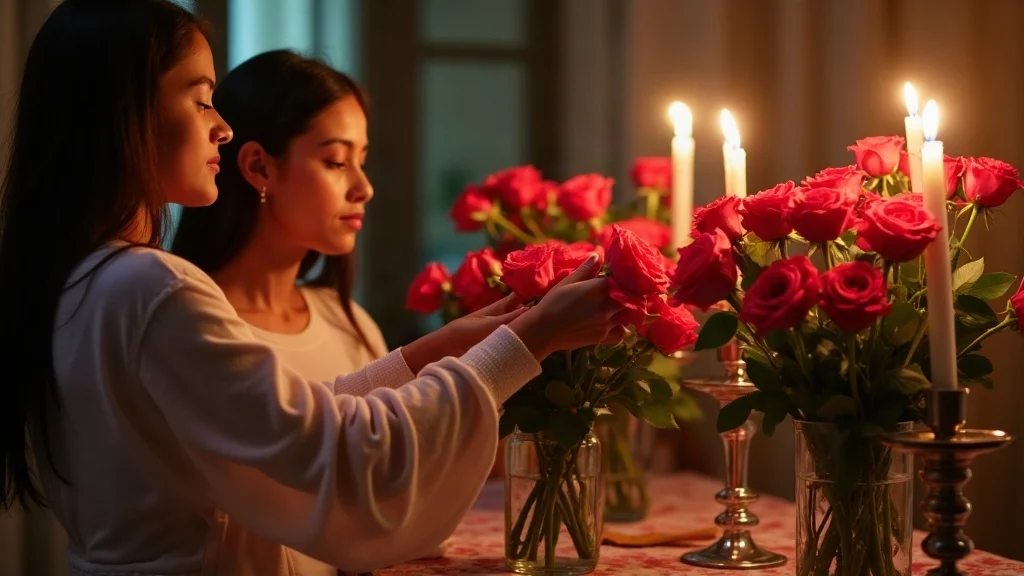
For decoraciones para la virgen de guadalupe, the guiding principle is reverence through simplicity. A cluttered altar distracts from prayer rather than facilitating it. Select decorations that enhance the sacred image without competing for attention. Traditional Mexican paper flowers, known as flores de papel, add festive color for feast days and can be crafted by children as a family activity. Fresh flowers, particularly roses, honor the miraculous sign given to Juan Diego and should be changed regularly to maintain freshness.
Step-by-Step Practical & Devotional Masterclass
Establishing an authentic home altar for Our Lady of Guadalupe is a sacred act that requires thoughtful preparation and ongoing devotion. The following step-by-step guide will help you create a shrine that is both beautiful and functional, a place where your family can encounter the Mother of God and grow in holiness.
Step One: Select the Sacred Space
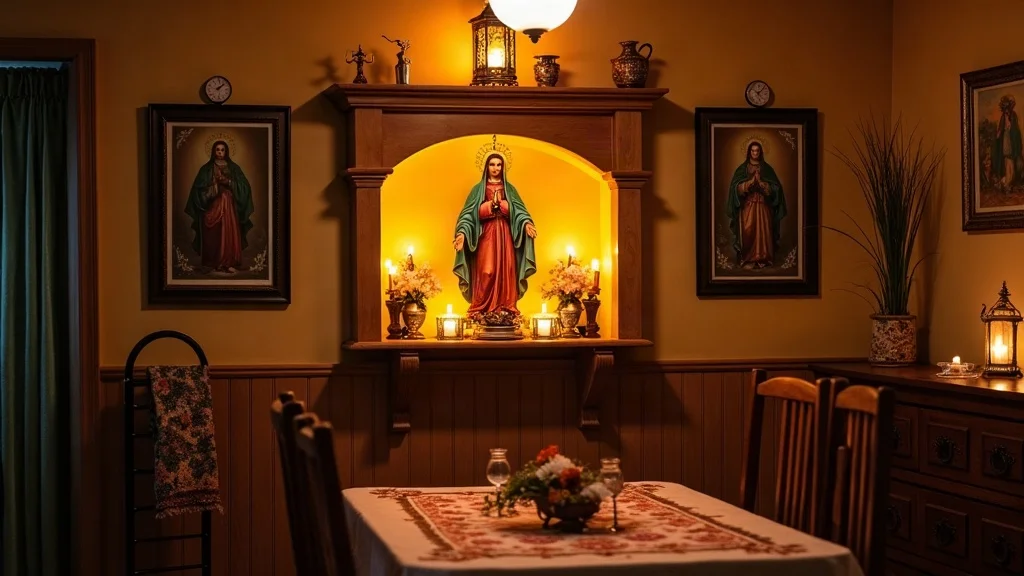
Begin by identifying a quiet, stable location in your home that invites prayer and reflection. A corner of the living room, a niche in the hallway, a bedroom wall, or a dedicated prayer room all work well. The space should be visible enough to remind the family of Mary's presence but not so prominent that it becomes part of the traffic flow. Consider the practical requirements: the location must have a flat surface for candles and flowers, adequate clearance from curtains and flammable materials, and protection from direct sunlight and humidity that could damage the sacred image.
Step Two: Prepare the Foundation
Once you have selected the location, prepare the surface for the altar. If using a table or shelf, ensure it is clean, stable, and level. Drape the altar cloth or rebozo virgen de guadalupe over the surface, allowing it to hang gracefully. The cloth should be clean and pressed, signifying the reverence with which we approach sacred things. Some families choose to place a small wooden platform or riser in the center to elevate the sacred image slightly above the candles and flowers, creating a visual hierarchy that draws the eye to Mary.
Step Three: Install the Sacred Image
The centerpiece of the home altar is the image of Our Lady of Guadalupe. Place the framed print, statue, or plaque in the center of the altar, slightly elevated above the other elements. If hanging the image on the wall,
- Discover our complete guide on best Our Lady of Guadalupe statues buying guide.
- Discover our complete guide on traditional prayer shawls and rebozo cloths.
Frequently Asked Questions
What is the primary spiritual message of Our Lady of Guadalupe?
Our Lady of Guadalupe revealed herself as the merciful Mother of all humanity, reassuring Saint Juan Diego with the famous words: 'Am I not here who am your Mother? Are you not under my shadow and protection?'
Why are Castilian roses significant in the Guadalupe miracle?
Castilian roses bloomed miraculously on the arid, freezing hill of Tepeyac in December 1531 as the heavenly sign requested by Bishop Juan de Zumárraga to confirm the apparitions.
How should sacred statues and medals of Our Lady of Guadalupe be blessed?
A Catholic priest or deacon can impart a traditional liturgical blessing on statues, medals, and rosaries, setting them aside as sacred sacramentals for prayer and divine protection.
- Discover our complete guide on best Our Lady of Guadalupe statues buying guide.
- Discover our complete guide on traditional prayer shawls and rebozo cloths.
Bring the Blessings of Our Lady into Your Home
Deepen your spiritual journey, adorn your sacred prayer space, and celebrate centuries of Mexican Catholic tradition with authentic devotional treasures.