The 1531 Apparitions of Our Lady of Guadalupe: Full Historical & Tepeyac Miracle Guide
AI Quick Summary: The 1531 Apparitions of Our Lady of Guadalupe represents a cornerstone of Catholic Marian devotion, uniting 1531 sacred history, miraculous Tepeyac iconography, and timeless spiritual protection for Christian families and pilgrims worldwide.
Introduction & Theological Significance
Few events in the history of the Western Hemisphere carry the theological weight, cultural resonance, and spiritual tenderness of the 1531 apparitions of Our Lady of Guadalupe. For nearly five centuries, the image of the Virgin of Guadalupe has served as the spiritual axis of the Americas, a radiant point of unity between the Old World and the New, between the Spanish missionary and the Indigenous neophyte, between heaven and the dusty soil of Tepeyac Hill.
To speak of Our Lady of Guadalupe is to speak of a mother’s intervention in the fragile dawn of a new civilization. It was December 1531, only a decade after the fall of Tenochtitlan, when the Blessed Virgin Mary is believed to have appeared to a humble Indigenous convert named Juan Diego Cuauhtlatoatzin. The encounter was not merely a private consolation; it was a public, miraculous, and permanent sign. The image left on Juan Diego’s tilma—a coarse cloak of cactus fiber—was not simply a painting to be venerated. It became the foundational Marian document of the New World, a celestial catechism written in the visual language of the Aztec people, and a testament to the Gospel’s power to transfigure, rather than erase, the cultures it touches.
This master guide serves the devoted Catholic, the curious historian, and the discerning shopper of Guadalupana.store. It is written for those who seek to understand the full historical arc of the *juan diego apparitions story*, the profound theological meaning of the *Nican Mopohua*, and the practical ways to integrate the *la virgencita de guadalupe* into a life of prayer. Whether you are preparing for a pilgrimage to the Basilica, studying the evidence for the tilma’s miraculous nature, or simply seeking to fall deeper in love with the Mother of God, this guide offers a comprehensive, reverent, and meticulously researched journey into the heart of the Guadalupe event.
## Historical Background & Sacred Chronology
### The World of 1531: A Clash of Civilizations
To grasp the magnitude of the apparitions, one must understand the volatile context of New Spain in the early sixteenth century. The Spanish conquest had shattered the Aztec empire, leaving a landscape of political ruin and profound spiritual disorientation. The Indigenous peoples faced the collapse of their cosmic order, while the Spanish colonists and missionaries struggled to communicate the mysteries of the Christian faith across a vast linguistic and cultural chasm. Into this delicate and often violent encounter, God sent His Mother.
### The Visionary: Saint Juan Diego Cuauhtlatoatzin
Born in 1474 in Cuauhtitlan, Juan Diego belonged to the Chichimec people. Following the conquest, he and his wife, María Lucía, were among the first Indigenous people to receive the sacrament of Baptism. After his wife’s death, Juan Diego moved to Tolpetlac to live with his uncle, Juan Bernardino. He was a man of deep, quiet faith, walking many miles to receive religious instruction and attend Mass. It was this humble, faithful soul—not a bishop, not a nobleman, but a simple peasant—whom the Virgin chose as her messenger.
### The Ecclesiastical Authority: Bishop Juan de Zumárraga
The first bishop of Mexico, a Franciscan friar known for his defense of the Indigenous people against exploitation, was the recipient of Juan Diego’s astonishing news. Initially skeptical, as any prudent shepherd of the Church would be, Zumárraga demanded a sign. This request set the stage for the climactic miracle of the roses and the tilma.
### The Nican Mopohua: The Foundational Text
The primary historical narrative of the apparitions is not a Spanish chronicle but a literary masterpiece in refined Nahuatl, known as the *Nican Mopohua* ("Here it is told"). Composed by the learned Indigenous scholar Antonio Valeriano around 1556, the text is a meticulously structured account of the four apparitions. It stands as one of the most important pieces of Indigenous Christian literature in existence, bridging the gap between the oral tradition of the Aztecs and the written theology of the Catholic Church. The *Nican Mopohua* is not merely a historical record; it is a poetic and doctrinal exposition of the Virgin’s role in the New Evangelization.
### The Sacred Chronology: December 1531
The traditional chronology, aligned to the Julian calendar in use at the time, unfolds over a few intense days:
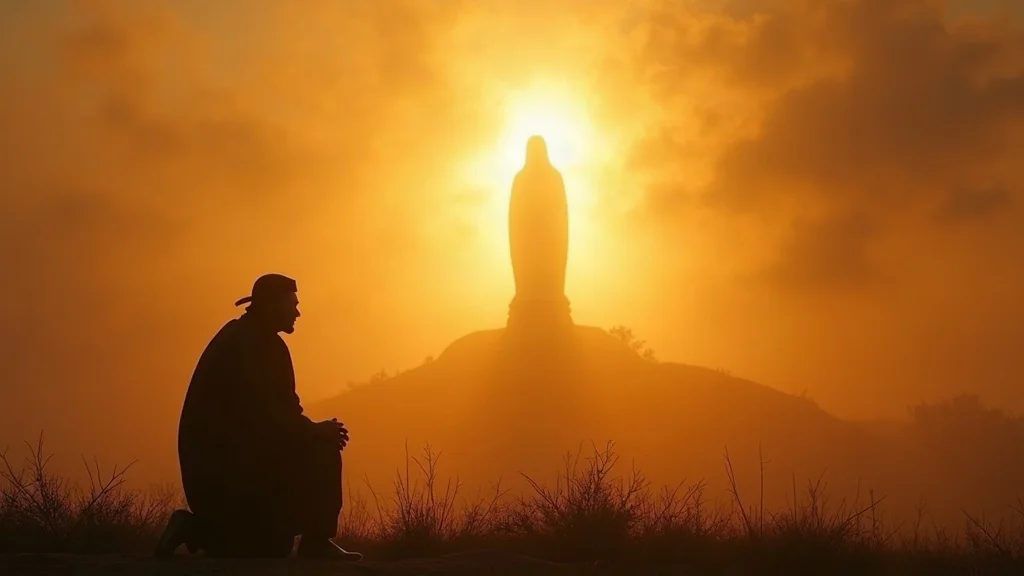
- **December 9:** On his way to Mass, Juan Diego hears celestial music near Tepeyac Hill. A radiant young woman appears, identifying herself as the "perfect and perpetual Virgin Mary, Mother of the true God." She requests that a church be built on that site so she can demonstrate her love and compassion to her people. Juan Diego dutifully relays the message to Bishop Zumárraga, who politely but firmly asks for time to consider the request.
- **December 10:** Juan Diego returns to Tepeyac, discouraged. He suggests the Virgin choose a more worthy messenger. Mary insists he return to the Bishop and repeat the request, assuring him of her help. Juan Diego obeys, but the Bishop, still uncertain, asks for a miraculous sign to authenticate the claim.
- **December 11:** The Virgin promises Juan Diego a sign for the following day. However, upon returning home, Juan Diego finds his uncle, Juan Bernardino, gravely ill with fever. The next morning, instead of meeting the Virgin, Juan Diego rushes to find a priest for his dying uncle. To avoid the apparition site, he takes a detour, but the Virgin intercepts him on the path. In a moment of profound tenderness, she reassures him: "Am I not here, I who am your mother?" She reveals that his uncle has been cured. She then instructs him to climb the hill and gather the Castilian roses he will find blooming there, despite the winter frost.
- **December 12:** Juan Diego gathers the roses into his tilma. He hurries to the Bishop’s palace. When he unfolds his cloak to present the roses as the requested sign, the image of the Virgin of Guadalupe is miraculously imprinted upon the coarse fabric. The Bishop falls to his knees in awe and repentance for his doubt. The *lady guadalupe* had given the ultimate proof of her presence.
## Key Theological Insights & Sacred Analysis
### The Tilma as a Visual Catechism
The image on the tilma is not just a portrait; it is a profound theological treatise encoded in a language the Indigenous people could instantly understand. Standing with her hands clasped in prayer, the Virgin is depicted as a young, Mestizo woman, bridging the two worlds. Her features, dress, and posture speak volumes.
- **The Sun and the Moon:** She stands before the rays of the sun and upon a crescent moon, signifying her victory over the darkness of the Aztec pantheon. She is brighter than the sun-god Tonatiuh and more powerful than the moon-god Metztli. She is the Woman of the Apocalypse, clothed with the sun.
- **The Stars:** Her blue-green mantle is adorned with forty-six stars, mirroring the exact configuration of the winter sky over Mexico City on December 12, 1531. This detail, invisible to the naked eye in the 16th century, is a silent witness to the divine orchestration of the event.
- **The Black Band:** The black maternity band tied high on her waist signifies that she is with child. She is the pregnant Mother, carrying the Savior of the world, presenting Him to the New World.
- **The Angel:** At her feet, an angel with eagle-like wings supports her. This figure is often interpreted as a messenger, holding the hem of her mantle as a sign of reverence and service.
- **The Brooch:** The black cross brooch at her neck is the symbol of the Spanish missionaries and the evangelization of the New World. It ties her image directly to the Catholic faith and the sacrifice of Christ.
### The Theology of *La Virgencita de Guadalupe*
The title "Guadalupe" itself is a point of profound mystery. Some scholars trace it to the Spanish river shrine of Our Lady of Guadalupe in Extremadura, a devotion dear to the conquistadors. Others suggest Bishop Zumárraga, upon hearing Juan Diego’s Nahuatl phrase *"Te coatlaxopeuh"* (which sounds similar to Guadalupe), interpreted it as "she who crushes the serpent." Regardless of the etymology, the theological meaning is clear: the Virgin of Guadalupe is the Mother of God who crushes the head of the ancient serpent, who brings the light of the true faith to a people in darkness, and who unites all peoples under her maternal mantle. She is the *virgen de guadalupe*, the Empress of the Americas, the patroness of the unborn, and the protector of the vulnerable.
## Comparative Guide & Technical Overview
To fully appreciate the richness of the Guadalupe tradition, it is helpful to compare the key elements of the apparition story with the physical realities of the tilma and the historical context. The following table offers a detailed overview of the primary components.
| Element | Historical / Traditional Detail | Physical / Material Description | Theological Significance | Devotional Practice |
|---|---|---|---|---|
| Juan Diego | Chichimec peasant, born 1474, baptized after conquest. | Historical person, canonized as Saint Juan Diego in 2002. | Model of humility and obedience; "the little messenger." | Feast day December 9; venerated as a model for the laity. |
| Bishop Zumárraga | First Bishop of Mexico, Franciscan friar, defender of natives. | Historical figure, key witness to the miracle. | Represents the Church's need for faith and discernment. | His conversion is a reminder of the power of divine signs. |
| Tepeyac Hill | Site of the apparitions, outskirts of Mexico City; formerly a sacred site. | Geographic location now home to the Basilica of Our Lady of Guadalupe. | A place of encounter, where ancient longing meets Christian fulfillment. | Pilgrimage site; millions visit annually, especially on December 12. |
| The Tilma | Coarse cloak of Juan Diego, made of ayate (cactus fiber) or maguey. | Approximately 1.7m x 1.05m; naturally woven, rough texture. | Vessel of the miraculous image; a sign of God's use of the humble. | Preserved in the Basilica as the primary relic of the apparitions. |
| The Roses | Castilian roses, blooming out of season in winter. | Delicate, fragrant flowers, carried in the tilma. | Symbol of the Virgin's purity, love, and the gift of grace. | Used in processions and as a symbol of offering to Mary. |
| The Image | Miraculous imprint on the tilma, revealed December 12, 1531. | No underdrawing or sketch; pigments defy known painting techniques. | A "heavenly catechism" in visual form; a true icon of the Mother of God. | Venerated as the primary image of Our Lady of Guadalupe. |
| Nican Mopohua | Foundational Nahuatl text, written by Antonio Valeriano (c. 1556). | Refined literary manuscript, a masterpiece of Indigenous prose. | Provides the doctrinal and narrative framework for the apparitions. | Read as a devotional text and historical source. |
## Step-by-Step Practical & Devotional Masterclass
The story of Guadalupe is not meant to remain in the past; it is a living invitation to encounter the Mother of God in the present. Whether you are a new devotee or a lifelong Guadalupano, the following steps offer a practical pathway to deepen your connection with the *virgencita de guadalupe*.
### Step 1: Pray the *Nican Mopohua*
The most profound way to enter the mystery is to read the sacred text. Set aside quiet time to read the *Nican Mopohua* slowly and prayerfully. Place yourself in the scene. Feel Juan Diego’s anxiety, his humility, and his ultimate joy. Let the words of the Virgin wash over you: "Hear me, my littlest son, let nothing discourage you, nothing depress you. Do not fear illness, nor any painful happening." This is the authentic voice of the Mother of God.
### Step 2: Build a Home Altar
Create a sacred space in your home dedicated to Our Lady of Guadalupe. This is a powerful way to sanctify your domestic life.
- **Choose a location:** Select a quiet, clean wall or corner.
- **Gather items:** Place a high-quality image of the *virgen de guadalupe* (available at Guadalupana.store) as the centerpiece. Add a crucifix, a Bible, and perhaps a candle.
- **Add natural elements:** Fresh flowers, especially roses, are a beautiful homage to the miracle. A small plant or a bowl of water can also be added.
- **Maintain the space:** Keep the altar clean and orderly. This is a visible sign of your reverence.
### Step 3: The Guadalupana Rosary
Pray the Rosary, but with a special Guadalupana focus. Before each decade, meditate on one of the apparitions or the symbols of the image. For example:
- **First Mystery (The First Apparition):** Mary asks Juan Diego for a church.
- **Second Mystery (The Second Apparition):** Juan Diego’s obedience to the Bishop.
- **Third Mystery (The Third Apparition):** The promise of the sign.
- **Fourth Mystery (The Roses Miracle):** The gathering of the winter roses.
- **Fifth Mystery (The Tilma Image):** The revelation of the miraculous image.
### Step 4: Practice the "Am I Not Here?" Devotion
In moments of distress, anxiety, or confusion, repeat the Virgin’s words to Juan Diego: "Am I not here, I who am your mother? Are you not under my shadow and protection?" This simple act of trust is a profound spiritual exercise. It is a declaration of faith in her maternal care and a surrender of your worries to her intercession.
### Step 5: Engage in Acts of Mercy
The message of Guadalupe was one of compassion and unity. Honor her by breaking down walls of division. Volunteer at a local charity, visit the sick, or simply offer a kind word to someone who is suffering. The Virgin of Guadalupe is the Mother of the poor and the forgotten; to serve them is to serve her Son.
## Spiritual Longevity & Devotional Practices
True devotion is not a fleeting emotion but a lifelong commitment that deepens over time. Just as the tilma has defied the natural decay of centuries, so too must our faith be durable and resilient.
### Preserving Your Sacred Objects
For those who purchase rosaries, statues, or jewelry from Guadalupana.store, proper care is a form of reverence.
- **Statues and Framed Images:** Dust them gently with a soft, dry cloth. Avoid harsh chemical cleaners. Keep them out of direct sunlight to prevent fading.
- **Rosaries:** Handle them with clean hands. If they become knotted, untangle them gently. A rosary is a tool for prayer, not a fashion accessory, though it can be a beautiful witness to your faith.
- **Jewelry (Medals, Pendants):** Clean silver or gold with a specialized polishing cloth. Avoid exposing them to water or harsh soaps, which can damage the finish.
### The Blessing of a Priest
It is a deeply rooted Catholic practice to have religious articles blessed by a priest. A blessing sets an object apart for sacred use, making it a sacramental that can draw you closer to God. When you receive a new item from Guadalupana.store, consider bringing it to your parish to be blessed. This simple act transforms a beautiful object into a vessel of grace.
### Passing the Tradition to the Next Generation
The greatest gift you can give your children and grandchildren is the story of Guadalupe.
- **Tell the Story:** Share the *juan diego apparitions story* in an age-appropriate way. Use picture books and simple language for the young.
- **Celebrate the Feast:** Make December 12 a major family celebration. Attend Mass, prepare traditional foods (like tamales), and sing *Las Mañanitas* to the Virgin.
- **Use the *Nican Mopohua*:** For older children and teens, explore the literary and theological depth of the *Nican Mopohua*. Discuss its meaning in the context of your family’s heritage and faith.
### The Enduring Promise
The apparitions of 1531 were not a temporary event. They were a permanent gift of a Mother to her children. The tilma remains a silent, powerful homily, proclaiming that God is with us, that His Mother walks beside us, and that her love is a refuge for all who call upon her. Let this guide be a starting point for a lifelong pilgrimage. May the *virgen de guadalupe*, the *lady guadalupe*, the *la virgencita de guadalupe*, wrap you in her mantle and lead you ever closer to her Son, Jesus Christ.
- Discover our complete guide on mystery and science of the Tilma of Guadalupe.
- Discover our complete guide on visiting the Basilica of Our Lady of Guadalupe in Mexico City.

Joseph's Studio by Roman 17" Our Lady of Guadalupe Wall Art Panel
⭐ 4.6 / 5.0 |
$54.99
Exquisite museum-quality wall art plaque capturing the historic 1531 apparition to Saint Juan Diego at Tepeyac with rich gold leaf accents and durable resin-stone composite.
Key Devotional Highlights & Materials:
- Feature: Authentic Joseph’s Studio Craftsmanship
- Feature: Hand-Painted Gold Leaf Accents
- Feature: Durable Stone-Resin Blend for Decades of Reverence
Devotional Highlights
- Authentic Craftsmanship: Created with high fidelity to traditional Catholic Marian iconography.
- Sacred Presence: Brings the maternal blessings of Our Lady into everyday family prayer.
Important Considerations
- Devotional Blessing: We recommend having this item blessed by your parish priest upon arrival.
Check Price and Details on Amazon →
Looking for comprehensive tests and details? Read our in-depth product review here →
Frequently Asked Questions
What is the primary spiritual message of Our Lady of Guadalupe?
Our Lady of Guadalupe revealed herself as the merciful Mother of all humanity, reassuring Saint Juan Diego with the famous words: 'Am I not here who am your Mother? Are you not under my shadow and protection?'
Why are Castilian roses significant in the Guadalupe miracle?
Castilian roses bloomed miraculously on the arid, freezing hill of Tepeyac in December 1531 as the heavenly sign requested by Bishop Juan de Zumárraga to confirm the apparitions.
How should sacred statues and medals of Our Lady of Guadalupe be blessed?
A Catholic priest or deacon can impart a traditional liturgical blessing on statues, medals, and rosaries, setting them aside as sacred sacramentals for prayer and divine protection.
- Discover our complete guide on mystery and science of the Tilma of Guadalupe.
- Discover our complete guide on visiting the Basilica of Our Lady of Guadalupe in Mexico City.
Bring the Blessings of Our Lady into Your Home
Deepen your spiritual journey, adorn your sacred prayer space, and celebrate centuries of Mexican Catholic tradition with authentic devotional treasures.