The Mystery and Science of the Tilma of Guadalupe: Microscopic Eyes, Pigments & Durability
AI Quick Summary: The Mystery and Science of the Tilma of Guadalupe represents a cornerstone of Catholic Marian devotion, uniting 1531 sacred history, miraculous Tepeyac iconography, and timeless spiritual protection for Christian families and pilgrims worldwide.
- Introduction & Theological Significance
- Historical Background & Sacred Chronology
- Key Theological Insights & Sacred Analysis
- Comparative Guide & Technical Overview
- Step-by-Step Practical & Devotional Masterclass
- Spiritual Longevity & Devotional Practices
- Related Devotional Guides & Deep Dives
- Frequently Asked Questions
- Related Devotional Guides & Deep Dives
- Bring the Blessings of Our Lady into Your Home
Introduction & Theological Significance
In the annals of Christian history, few objects inspire such a convergence of devout faith, historical inquiry, and scientific curiosity as the sacred tilma of Our Lady of Guadalupe. Housed within the Basilica of Our Lady of Guadalupe at the foot of Tepeyac Hill in Mexico City, this unassuming cloak—woven from humble agave fibers—has become the most scrutinized religious artifact in the Western Hemisphere. For the Catholic faithful, the tilma is not merely a relic; it is a supernatural letter from Heaven, a celestial canvas upon which the Mother of God imprinted her likeness to evangelize a new world. For the historian, it is a pivotal document of the 16th century, marking the dramatic confluence of the Old World and the New. For the scientist, it presents an unresolved paradox that defies conventional conservation and artistic methodology.
This master guide is crafted for the devotee, the inquirer, and the collector. Whether you are seeking to deepen your understanding of the ayate cloth miracle, investigating the controversial Guadalupe eyes reflection studies, or simply wish to comprehend the physical reality of the Virgin Mary painting tilma, this resource distinguishes documented history from pious legend and verified observation from speculative theory. We invite you to journey into the heart of the mystery, where faith and empirical inquiry meet, and where a 500-year-old garment continues to proclaim a message of love and unity.
Historical Background & Sacred Chronology
The narrative of the tilma is inseparable from the dramatic events of December 1531. Just a decade after the fall of Tenochtitlan, the spiritual conquest of Mexico was fraught with tension. Into this volatile landscape stepped a 57-year-old indigenous peasant named Juan Diego Cuauhtlatoatzin, a recent convert to Christianity. According to the earliest extant account, the Nican Mopohua (written in Nahuatl by Antonio Valeriano around 1556), the Virgin Mary appeared to Juan Diego on the hill of Tepeyac, a site previously dedicated to the mother goddess Tonantzin.
Mary instructed Juan Diego to go to the palace of the first bishop of Mexico, Fray Juan de Zumárraga, and request that a temple be built in her honor on that very site. The bishop, skeptical of the indigenous convert’s claims, asked for a sign. On December 12, 1531, Juan Diego, distraught over his dying uncle Juan Bernardino, attempted to avoid the Virgin to fetch a priest. Mary intercepted him, assuring him of his uncle’s recovery, and instructed him to climb the barren hill to gather Castilian roses—miraculously blooming despite the winter frost. As Juan Diego gathered the roses into his tilma, the Virgin arranged them with her own hands and told him to present them to the bishop as the requested sign.
When Juan Diego unfolded his coarse cloak before Bishop Zumárraga, the roses tumbled to the floor, revealing a stunningly beautiful image of the Virgin Mary—dark of complexion, with the features of a mestiza—clothed in a star-studded mantle and standing before the sun and moon. This moment transformed the Americas. Within seven years of the apparition, an estimated nine million indigenous people converted to Catholicism, a cultural and spiritual revolution unparalleled in missionary history. The tilma became the great evangelizing catechesis, its symbols speaking directly to the indigenous imagination while remaining doctrinally sound to the Spanish clergy.

Abstract Virgin Mary Canvas Wall Art - Miraculous Tilma Painting Replica
⭐ 5.0 / 5.0 |
$33.99
High-definition archival canvas replica of the sacred Tilma of Tepeyac, printed with UV-resistant inks on textured cotton canvas to showcase every celestial star and detail.
Key Devotional Highlights & Materials:
- Feature: Museum-Grade Archival Cotton Canvas
- Feature: UV-Resistant Vibrant Fade-Proof Inks
- Feature: Ready to Hang in Prayer Room or Home Altar
Devotional Highlights
- Authentic Craftsmanship: Created with high fidelity to traditional Catholic Marian iconography.
- Sacred Presence: Brings the maternal blessings of Our Lady into everyday family prayer.
Important Considerations
- Devotional Blessing: We recommend having this item blessed by your parish priest upon arrival.
Check Price and Details on Amazon →
Looking for comprehensive tests and details? Read our in-depth product review here →
Key Theological Insights & Sacred Analysis
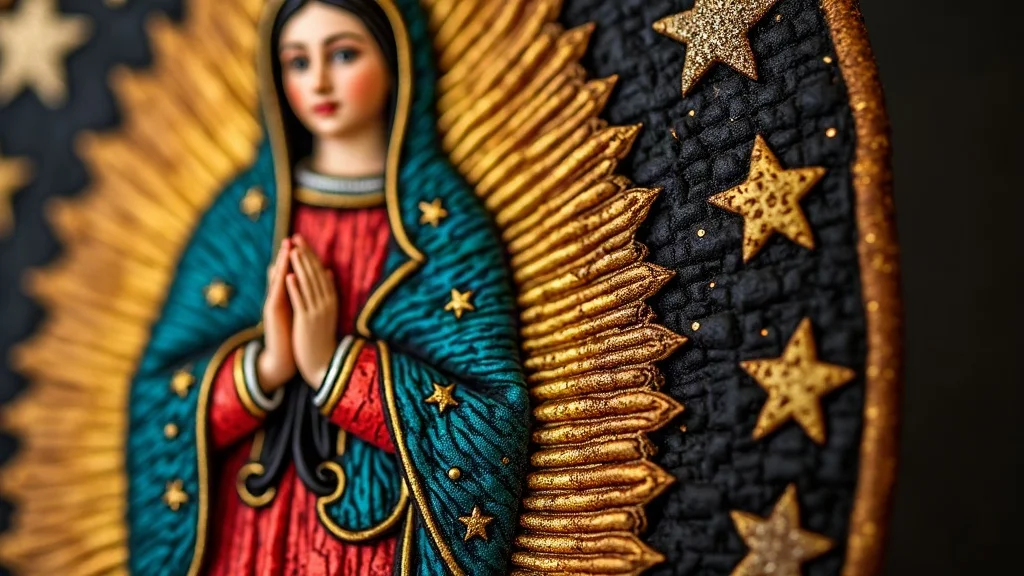
Theology teaches that the tilma of Guadalupe is a "sacramental" in the broadest sense—a visible sign instituted by God to signify and convey grace. While the Church does not require the faithful to believe in the historicity of the apparitions as a matter of faith, the image itself has served as a profound instrument of unity and conversion for nearly five centuries. The iconography is a masterclass in evangelization. The Virgin stands before the sun, indicating she is greater than the feared solar deity Huitzilopochtli. She stands upon the moon, signifying her triumph over the lunar god of the night. Her blue-green mantle is the color of the divine couple Ometeotl, yet it is also the color of royalty reserved for the Virgin in European art.
Her hands are folded in prayer, a sign of humility and intercession. The four-petal flower (Nahui Ollin) on her gown is the symbol of the Fifth Sun, the center of the cosmos, signifying that a new era has begun. The stars on her mantle mirror the exact constellation alignment of the winter solstice of 1531, presenting her as the Queen of the Heavens. She appears as a young pregnant woman (evidenced by the subtle protrusion of her belly and the brooch tying her sash high above her waist), signifying that she carries the Christ Child. In her, the Old World and the New are reconciled; she is the mother of all, transcending race and class. The tilma is not a painting to be merely admired; it is a theological treatise to be read.
Comparative Guide & Technical Overview
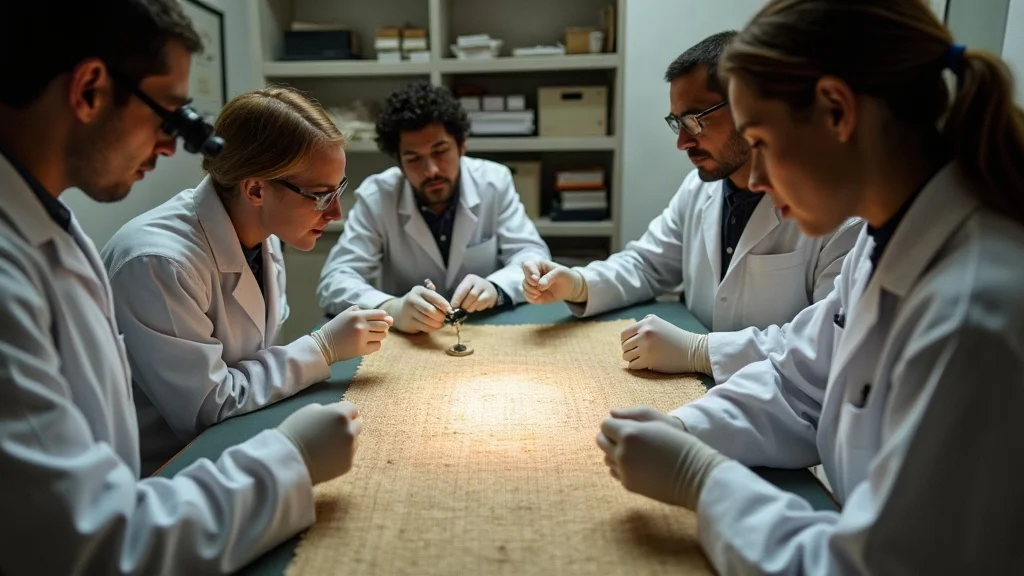
To appreciate the mystery of the tilma of Our Lady of Guadalupe, one must understand its physical reality and the documented investigations that have surrounded it. The following table provides a comparative overview of the primary scientific claims, the researchers involved, and the current status of these assertions.
| Attribute / Study | Material / Method | Primary Researcher | Key Claim | Current Status |
|---|---|---|---|---|
| Substrate Material | Ayate / Ixtle (Agave fibers) | Various Conservators | Two pieces of coarse cloth sewn with cotton thread; rough texture. | Verified historical fact. Agave fibers typically degrade in 20-50 years. |
| Image Pigments | Unknown / No binding agent | Dr. Philip Serna Callahan (Infrared) | No underdrawing, no sizing, no varnish; color appears to float above the surface. | Reported finding; debated due to lack of independent replication. |
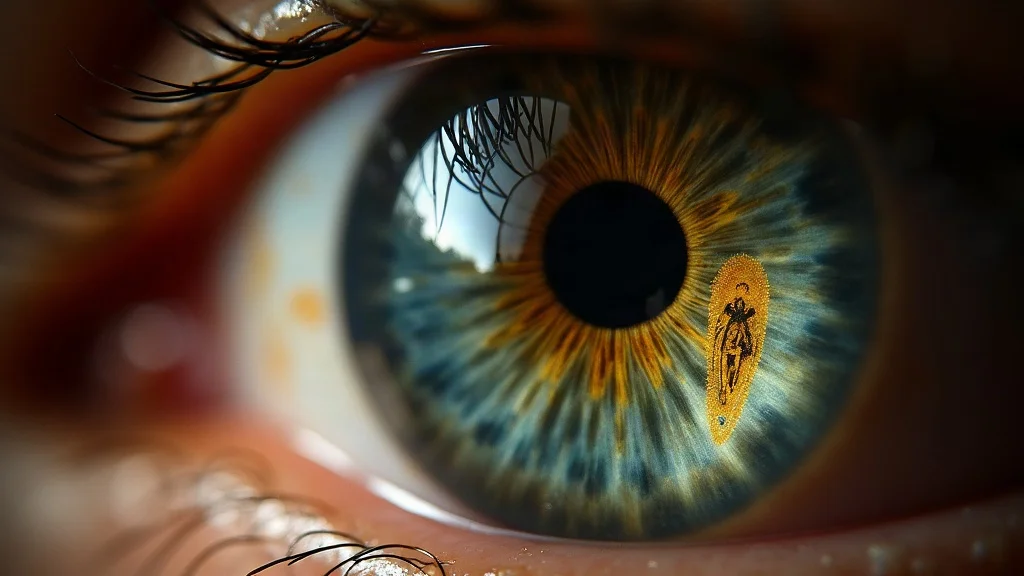
| Eye Reflections | Microscopic Imaging | Dr. José Aste Tönsmann | Human figures (Juan Diego, Bishop) visible in the corneas of the Virgin's eyes. | Contested interpretation; often dismissed as pareidolia by secular scientists. |
| Thermal Regulation | Infrared Thermography | Various (Popularized) | The tilma maintains a temperature of 98.6°F (36.6°C), like a living body. | Devotional claim; not a settled scientific measurement. |
| Structural Durability | Material Analysis | Dr. Richard Kuhn (Nobel Laureate) | No scientific explanation for the lack of decay or deterioration of the fibers. | Unverified; often cited in devotional literature without primary documentation. |
Regarding the so-called NASA tilma study, it is crucial to clarify that NASA has never officially certified the tilma as miraculous. While some researchers with technical backgrounds have conducted imaging analyses, the notion that NASA issued a formal verdict is an overstatement found in popular retellings. Similarly, the 98.6°F temperature reading is a popular claim that originated from later infrared reporting and has been repeated in devotional contexts, but it lacks rigorous, peer-reviewed validation. The most defensible scientific position is that the tilma exhibits unusual longevity and has produced unresolved questions regarding its creation, but these mysteries serve to deepen the faithful's wonder rather than to provide a laboratory "proof" of faith.
Step-by-Step Practical & Devotional Masterclass
Engaging with the mystery of the tilma is not limited to passive reading; it calls for active devotion. Whether you are preparing for a pilgrimage to Mexico City or seeking to integrate the spirituality of Guadalupe into your daily life, this masterclass offers a path toward deeper veneration.
- Prepare Your Heart: Begin with a prayer to the Holy Spirit, asking for the grace to see beyond the physical image to the spiritual reality it represents. Approach the mystery with the humility of Juan Diego, not the skepticism of a detached critic.
- Study the Image: Obtain a high-resolution print of the sacred image. Spend time in silence observing the details: the stars, the flowers on her gown, the folded hands, the compassionate gaze. Read the Nican Mopohua to understand the narrative that gave birth to the image.
- Make a Pilgrimage (Physical or Spiritual): If you can travel, visit the Basilica of Our Lady of Guadalupe. Walk the path of Tepeyac, touch the stone where tradition says Juan Diego stood, and pray before the tilma. If travel is impossible, make a "spiritual pilgrimage" by setting aside a specific time to pray the Rosary before an image of Our Lady.
- Establish a Home Altar: Create a dedicated space in your home. Place a blessed image of Our Lady of Guadalupe upon it. Surround it with fresh flowers, particularly roses, in memory of the Castilian bloom miracle. Light a candle, symbolizing the light of faith she brought to the Americas.
- Integrate the Message: The Virgin of Guadalupe is the patroness of the unborn and a symbol of justice for the oppressed. Integrate her message by performing acts of charity and mercy. Volunteer at a pro-life organization, support indigenous communities, or simply offer a kind word to the marginalized in your own community.
Spiritual Longevity & Devotional Practices
The physical tilma has survived nearly five centuries, a testament to either miraculous intervention or an exceptionally stable environment—devotionally, we affirm the former. For those who possess sacred objects, such as rosaries, medals, or framed images of the tilma of Guadalupe, it is a duty to preserve them with the same reverence the Basilica affords the original.
To ensure the spiritual and physical longevity of your sacred items, follow these guidelines: First, avoid touching the surface of prints or canvases with bare hands, as oils from the skin can cause degradation over time. If you have a framed image, dust the glass gently with a soft, dry microfiber cloth. Do not use chemical cleaners. For jewelry, such as a Guadalupana medal, clean it with a gentle, non-abrasive jewelry cloth to restore its luster, and keep it in a dry, cool place when not worn.
It is a deeply rooted Catholic practice to have sacred images blessed by a priest. A priest can bless your home altar or a specific piece of jewelry, setting it apart for divine use. Finally, pass on the tradition. Gather your children or grandchildren and tell them the story of Juan Diego. Explain that the tilma is not a piece of art, but a sign of God's love for the Americas. Teach them the prayer of Juan Diego: "Am I not here, I who am your mother?" In this way, the mystery of the tilma is not merely preserved behind glass in a museum-like shrine; it lives on in the hearts of the faithful, generation after generation, until the end of time.
- Discover our complete guide on the 1531 Tepeyac apparition miracle story.
- Discover our complete guide on secret symbolism of the stars and moon on the mantle.
Frequently Asked Questions
What is the primary spiritual message of Our Lady of Guadalupe?
Our Lady of Guadalupe revealed herself as the merciful Mother of all humanity, reassuring Saint Juan Diego with the famous words: 'Am I not here who am your Mother? Are you not under my shadow and protection?'
Why are Castilian roses significant in the Guadalupe miracle?
Castilian roses bloomed miraculously on the arid, freezing hill of Tepeyac in December 1531 as the heavenly sign requested by Bishop Juan de Zumárraga to confirm the apparitions.
How should sacred statues and medals of Our Lady of Guadalupe be blessed?
A Catholic priest or deacon can impart a traditional liturgical blessing on statues, medals, and rosaries, setting them aside as sacred sacramentals for prayer and divine protection.
- Discover our complete guide on the 1531 Tepeyac apparition miracle story.
- Discover our complete guide on secret symbolism of the stars and moon on the mantle.
Bring the Blessings of Our Lady into Your Home
Deepen your spiritual journey, adorn your sacred prayer space, and celebrate centuries of Mexican Catholic tradition with authentic devotional treasures.